
Fashion FAQ: Griege Fabric vs Stock Fabric? What’s the difference?
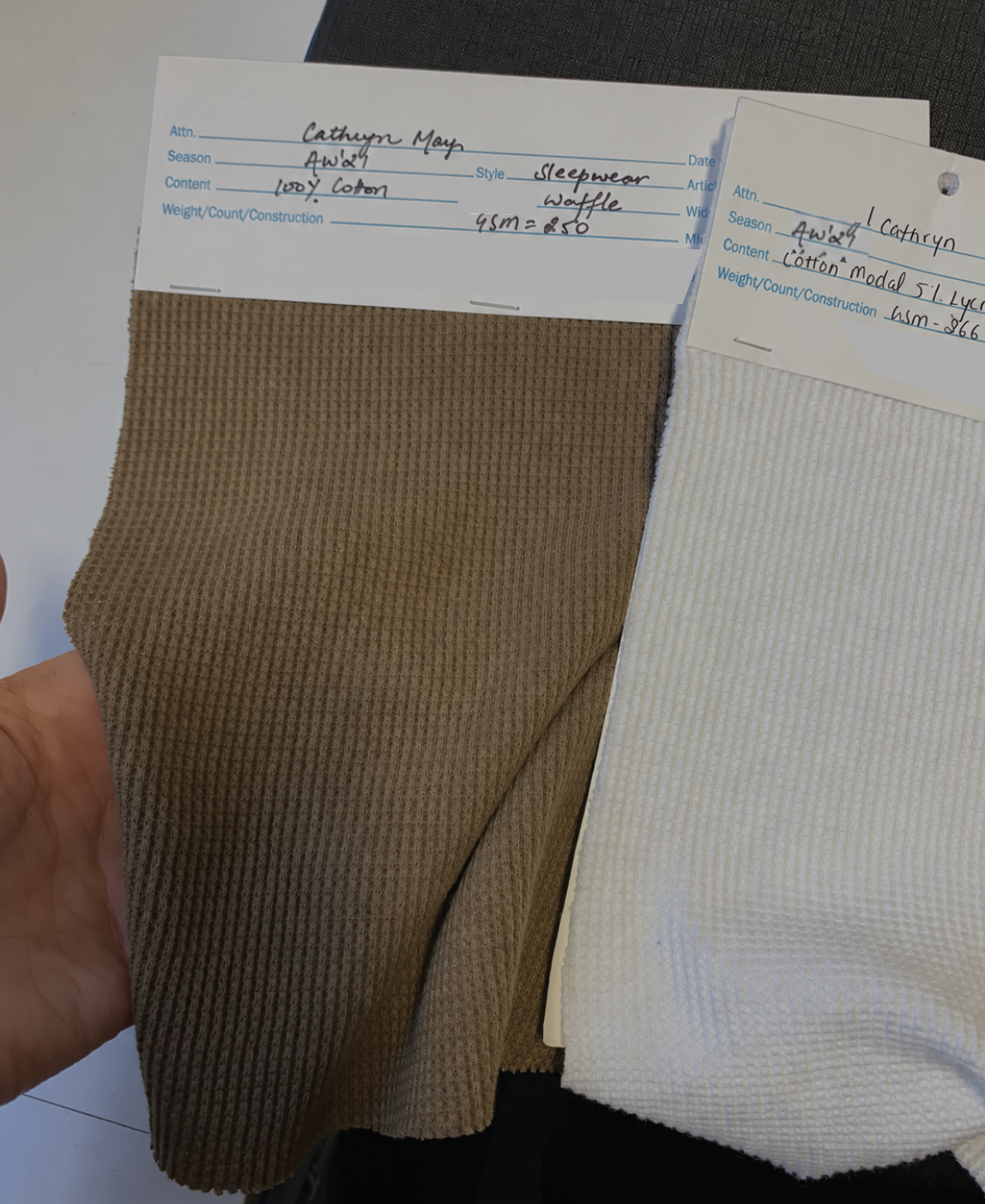
When sourcing fabric, you’ll often come across the terms stock fabric and greige fabric., and you have probably thought to yourself. What does that even mean? Well let me explain….
Stock or Griege describe different things, and understanding the distinction between the two, can help you have clearer conversations with your supplier.
The key difference? Stock describes availability. Greige describes the stage of processing.
What is stock fabric?
Stock fabric is a fabric a supplier/factory already holds in inventory. Instead of being produced specifically for your order, it is available from an existing quantity.
The term alone doesn’t tell you whether the fabric is ready to cut and sew. Stock fabric may be dyed, printed or finished, but it can also be unfinished.
For example, a supplier might hold a navy cotton elastane fabric that is ready to use, or a raw cotton fabric that still needs dyeing and finishing. Both can be described as stock fabric.
When a supplier says something is “in stock”, it’s worth asking what condition it is in and how much is available to you.
What is greige fabric?
Greige fabric, pronounced “gray-j”, is a fabric in its raw state after weaving or knitting, before processes such as bleaching, dyeing, printing and finishing.
It often has a natural cream or off-white appearance, depending on the fibres used. Despite its pronunciation, “greige” doesn’t mean the fabric is grey.
Think of it as an unfinished starting material. Further processing develops the colour, feel and performance needed for its intended use.
Can fabric be both stock and greige?
Yes. A supplier can hold greige fabric in stock.
For example, a mill might have rolls of undyed woven cotton in its warehouse. That fabric is:
Stock fabric because it is already held in inventory.
Greige fabric because it has not yet been dyed or finished.
If you order it in a particular colour, the base fabric already exists, but the processing still needs to happen. “In stock” therefore doesn’t necessarily mean “ready to use”.
What should you ask your supplier?
Before placing an order, clarify exactly what is being offered:
Is the fabric finished, or is it greige?
Is it ready to cut and sew?
How much is currently available?
Does the quoted price include dyeing and finishing?
What processing is still required before delivery?
Can I see a sample in the final finish?
These questions help you compare quotations fairly and understand what needs to happen between ordering the fabric and using it.
Most bigs brand place griege orders up front to lock down the fabric / yarn costs early before placing against a style. This allows them to get the best price, which is great for the big brands. if your a Start up, using in stock fabric can have a cost advantage, so its always worth asking what stock fabric your factory has on their floor to help give you a better price.
